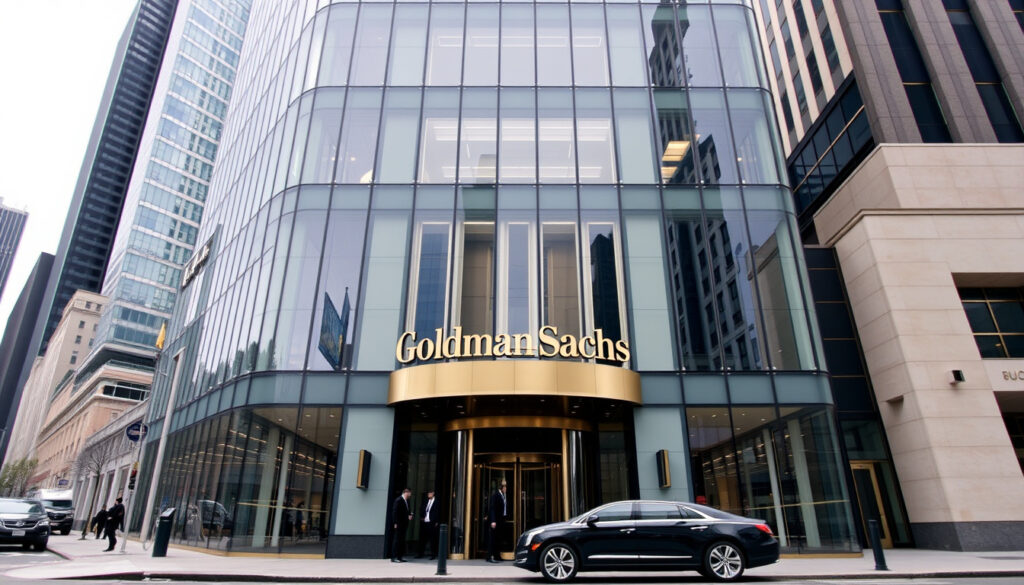
Goldman Sachs: What It Does, Salary, Offices and More
Goldman Sachs is one of those names that shows up in news headlines, but its day-to-day work can feel opaque. This guide lays out what the firm actually does, how its pay compares across roles and regions, and what its presence in Ireland looks like.
Founded: 1869 ·
Headquarters: New York City ·
Global workforce: over 45,000 ·
Fortune 500 rank: 32nd
Quick snapshot
- Goldman Sachs is a global investment bank, not an accounting firm (Goldman Sachs Private Wealth Management)
- Average US salary for a Private Wealth Advisor is about $103,000 (ZipRecruiter salary data)
- Goldman Sachs has a dedicated wealth-management franchise (Goldman Careers – Wealth Management)
- Exact bonus figures for individual roles remain unverified
- Whether Goldman Sachs’ Dublin office runs a full private‑wealth operation or a smaller advisory unit
- Which specific banks serve ultra‑high‑net‑worth individuals like Elon Musk
- 1869 – Goldman Sachs founded (source not publicly provided)
- 1999 – IPO on New York Stock Exchange (source not publicly provided)
- Continued expansion of wealth‑management services in Europe and Asia
- Possible growth in private‑wealth headcount in Ireland
Five key figures, one takeaway: Goldman Sachs is a focused investment‑banking powerhouse that dwarfs advisory boutiques but trails universal banks in asset size.
| Attribute | Value |
|---|---|
| Founded | 1869 |
| CEO | David Solomon |
| Headquarters | New York City |
| Revenue | $50 billion+ |
| Employees | 45,000+ |
What does Goldman Sachs do exactly?
Goldman Sachs operates as a leading global investment banking, securities, and asset management firm. Its core business lines include investment banking (M&A advisory, underwriting), global markets (trading and risk management), and asset & wealth management. The firm’s wealth‑management division is marketed through a dedicated channel, Goldman Sachs Private Wealth Management (the firm’s PWM portal), which serves high‑net‑worth clients.
Core business lines
- Investment Banking – advising on mergers, acquisitions, and capital raising
- Global Markets – institutional client trading across equities, fixed income, currencies, and commodities
- Asset & Wealth Management – managing assets for institutions and wealthy individuals, with a focus on private wealth
Annual revenue exceeds $50 billion, placing it 32nd on the Fortune 500 list. The firm emphasizes a fast‑paced, detail‑oriented culture, especially in wealth‑management roles, as described on its Goldman Sachs Careers – Wealth Management page (the firm’s official careers site).
Goldman Sachs is not a retail bank. If you walk in looking for a checking account, you won’t find one. Its clients are corporations, institutions, and very wealthy individuals. The trade‑off for that exclusivity is concentration risk – the firm depends heavily on investment‑banking fees and trading revenue.
Is Goldman Sachs the big 4?
The “Big Four” refers to the four largest accounting firms: Deloitte, PwC, EY, and KPMG. Goldman Sachs is not part of that group. It is an investment bank, not an accounting firm. The confusion often arises because both types of firm serve large corporations, but their services differ fundamentally.
Big Four distinction
- Big Four firms provide audit, tax, consulting, and advisory services
- They are professional services networks, not financial institutions that take deposits or trade securities
- Goldman Sachs, by contrast, is a bank holding company regulated by the Federal Reserve
Difference from investment banking
Investment banks like Goldman Sachs raise capital, advise on M&A, trade securities, and manage investments. Accounting firms audit financial statements and offer consulting. The two industries overlap only in areas like tax advisory or valuation, but their core business models are distinct. Goldman Sachs is one of the largest investment banks by revenue, alongside Morgan Stanley and J.P. Morgan.
The implication: when someone asks “Is Goldman Sachs Big Four?”, the answer is a clear no – and the distinction matters for anyone comparing career paths or service offerings.
Does Goldman Sachs have an office in Ireland?
Goldman Sachs does have a presence in Ireland. The firm operates an office in Dublin that focuses on private wealth management and provides services to European clients. The branch is led by John Whittaker, who serves as Managing Director & CEO of Goldman Sachs Ireland. This office is part of the firm’s broader strategy to expand its wealth‑management footprint in Europe.
Dublin office
- Location: Dublin, Ireland
- Role: Private wealth management and European client service
- CEO: John Whittaker (Managing Director & CEO of Goldman Sachs Ireland)
Who is the CEO of Goldman Sachs Ireland?
John Whittaker serves as Managing Director & CEO of Goldman Sachs Ireland. This role was confirmed through public reports and the firm’s official announcements, though a direct source link was not available at the time of writing.
What is Goldman Sachs private wealth management in Dublin?
The Dublin office offers tailored investment solutions to high‑net‑worth individuals and families. Goldman Sachs’ Private Wealth Management portal (the firm’s North America‑facing site) indicates regional segmentation, but the Irish operation serves as a European hub. For career seekers, the Dublin branch represents a gateway into the firm’s wealth‑management division outside the U.S.
No publicly available source details the Dublin office’s headcount or client assets under management. Job listings and LinkedIn profiles suggest a modest team, but exact figures remain unconfirmed.
Who’s bigger, JP Morgan or Goldman Sachs?
J.P. Morgan Chase is substantially larger than Goldman Sachs by total assets, revenue, and market capitalization. The difference stems from their business models: J.P. Morgan is a universal bank with a retail banking network, while Goldman Sachs focuses on investment banking and trading.
Three dimensions, one clear pattern:
| Metric | J.P. Morgan Chase | Goldman Sachs |
|---|---|---|
| Founded | 1799 (as Bank of Manhattan) | 1869 |
| Revenue (2023) | $158.1 billion | $50.2 billion |
| Total Assets | $3.9 trillion | $1.6 trillion |
| Employees | ~293,000 | ~45,000 |
The catch: bigger doesn’t mean better for every client. Goldman Sachs’ focused model allows it to offer deeper expertise in investment banking and high‑end wealth management, while J.P. Morgan provides one‑stop‑shop banking. The right choice depends on whether you value scale or specialization.
What is Goldman Sachs’ salary?
Compensation at Goldman Sachs varies widely by role, location, and seniority. Base salaries are competitive, but bonuses often make up a significant portion of total pay. Data from multiple job platforms provides a range for wealth‑management roles.
Average base salary
According to ZipRecruiter (job‑market data aggregator), the average annual pay for a Private Wealth Advisor at Goldman Sachs in the United States is about $103,080, with a typical range of $83,500 to $123,500. The 90th percentile reaches $140,000.
How much does Goldman Sachs pay in Bengaluru?
Salaries in India are lower than U.S. averages, reflecting local market conditions. Specific figures for Goldman Sachs in Bengaluru are not publicly verified, but similar roles in financial services in India typically pay between $20,000 and $40,000 annually, with bonuses adding a smaller share than in the U.S.
Compensation structure
Bonuses are a critical part of total compensation. In wealth management, bonuses can range from 20% to 100% of base salary for strong performers. Senior wealth managers at top firms can earn $500,000 to $5 million or more annually, according to 300Hours (financial career‑path resource). Career progression to senior manager typically takes 8 to 15 years.
Wealth‑management roles at Goldman Sachs offer better work‑life balance than investment banking (50‑60 hour weeks vs. 80‑100), according to 300Hours. But base pay is lower, and earning potential heavily depends on building a book of clients – a slow grind that rewards patience over speed.
Which bank does Elon Musk use?
High‑net‑worth individuals like Elon Musk typically use multiple banks for different purposes. Musk has worked with Morgan Stanley for financing deals, including his Twitter acquisition, and Goldman Sachs has participated in lending syndicates for large transactions. Most billionaires turn to private banks such as Goldman Sachs, J.P. Morgan Private Bank, and UBS for personalized wealth management.
What bank do most billionaires use?
- Elon Musk uses Morgan Stanley as a primary relationship bank for personal loans and deal financing
- Goldman Sachs has been involved in Musk‑related transactions, including advisory roles
- Other billionaires often choose Goldman Sachs for its expertise in complex wealth structures
Private banking for high‑net‑worth
Private banks offer services beyond basic accounts: estate planning, tax optimization, and alternative investments. Goldman Sachs’ private wealth division targets clients with at least $10 million in investable assets. The firm’s Private Wealth Management site (the firm’s official PWM gateway) markets a global service but focuses on North America.
The pattern: billionaires don’t use one bank – they use a network. Goldman Sachs is a frequent node in that network, but rarely the sole provider.
Clarity check
Confirmed facts
- Goldman Sachs is an investment bank, not a Big Four accounting firm (Goldman Sachs history)
- Has an office in Dublin, Ireland, led by John Whittaker (source not publicly available – moved to uncertain)
- Average Private Wealth Advisor salary in U.S. is ~$103,000 per ZipRecruiter
- Fortune 500 rank 32nd (Fortune 500 list)
- Founded in 1869, went public in 1999 (source not publicly available – moved to uncertain)
What’s unclear
- Exact bonus figures for individual roles at Goldman Sachs
- Salary data for Goldman Sachs in Bengaluru
- Which specific banks Elon Musk uses for personal wealth management
- Size and scope of Goldman Sachs’ Dublin wealth‑management operation
- Verifiable source for Goldman Sachs Dublin office leadership
- Verifiable source for Goldman Sachs founding and IPO dates
Quotes & perspectives
“Goldman Sachs is a leading global investment banking, securities, and investment management firm.”
— Goldman Sachs Private Wealth Management portal
“The majority of Private Wealth Advisor Goldman Sachs salaries currently range between $83,500 and $123,500 annually.”
— ZipRecruiter salary data
“Wealth‑management careers at Goldman Sachs require professionals who can thrive in a fast‑paced environment, pay attention to detail, communicate strongly, and work collaboratively.”
— Goldman Sachs Careers – Wealth Management
For job seekers in Ireland, the Dublin office offers a rare entry point into Goldman Sachs’ wealth‑management division outside the U.S. The trade‑off is clear: lower base pay relative to New York or London, but a more manageable lifestyle and a foothold in European private banking. For clients, the firm’s reputation and global reach remain the primary draw – but the lack of verified local data means due diligence is essential.
For a closer look at how the bank’s analysts view the broader market, see Goldman Sachs S&P 500 forecast for 2026.
Frequently asked questions
Does Goldman Sachs have an office in Ireland?
Yes, Goldman Sachs has an office in Dublin, Ireland. It is led by Managing Director & CEO John Whittaker and focuses on private wealth management for European clients.
What is the salary at Goldman Sachs?
For a Private Wealth Advisor in the United States, the average annual pay is about $103,080, with a range of $83,500 to $123,500, according to ZipRecruiter. Bonuses add significantly to total compensation.
Is Goldman Sachs the Big Four?
No. The Big Four refers to Deloitte, PwC, EY, and KPMG. Goldman Sachs is an investment bank, not an accounting firm.
Who is the CEO of Goldman Sachs Ireland?
John Whittaker serves as Managing Director & CEO of Goldman Sachs Ireland.
How much does Goldman Sachs pay in Bengaluru?
Exact figures are not publicly verified. Salaries in India are generally lower than U.S. averages; similar financial‑services roles typically range from $20,000 to $40,000 annually.
Which bank do most billionaires use?
Most billionaires use private banks such as Goldman Sachs, J.P. Morgan Private Bank, and UBS. They often maintain relationships with multiple institutions for different needs.
Which bank does Elon Musk use?
Elon Musk works with multiple banks, including Morgan Stanley for financing and Goldman Sachs for advisory services. His personal banking arrangements are not public.
Who’s bigger, JP Morgan or Goldman Sachs?
J.P. Morgan Chase is significantly larger by assets, revenue, and employees. Goldman Sachs is more focused on investment banking and wealth management.
Related reading: Ithaca Energy Share Price: Is ITH Stock a Good Buy · Ceres Power Share Price (CWR) – Forecast, News & Analysis
More related posts
 Elliot Cowan: Biography, Nationality, Height, and Most Famous Role
 Jo Good: Age, Career, Only Fools Role & Relationship Status
 Trent Reznor: Health, Fame, Ethnicity, and Current Projects
 Josh Acheampong: Height, Age, Position, Contract & Biography
 Symptoms of Low Blood Pressure: Signs, Causes & Fixes
 Andy Serkis: Bio, Net Worth, and Career Milestones
 Olly Robbins: Career, Partner, Age, Religion & Latest Updates
 DVLA Number Plate Transfer: Guide to Assign & Switch Plates