How Many Continents Are There in the World – The Facts
The Disputed Count: How Many Continents Are There?
Ask a classroom in London how many continents exist, and you will likely hear seven. Pose the same question in Latin America or parts of Europe, and six may be the answer. The disparity is not accidental. While geography might seem like a settled science, the definition of a continent remains surprisingly fluid, shaped by cultural convention, geological interpretation, and educational tradition rather than strict scientific consensus.
The Models at a Glance
Geographic convention currently recognizes three primary classification systems. The seven-continent model dominates English-speaking countries, East Asia, and India. The six-continent model prevails across much of Europe and Latin America, though it合并 different landmasses depending on the region. A four-continent model, grouping Afro-Eurasia and the Americas, finds support among geologists who prioritize tectonic continuity over human geography.
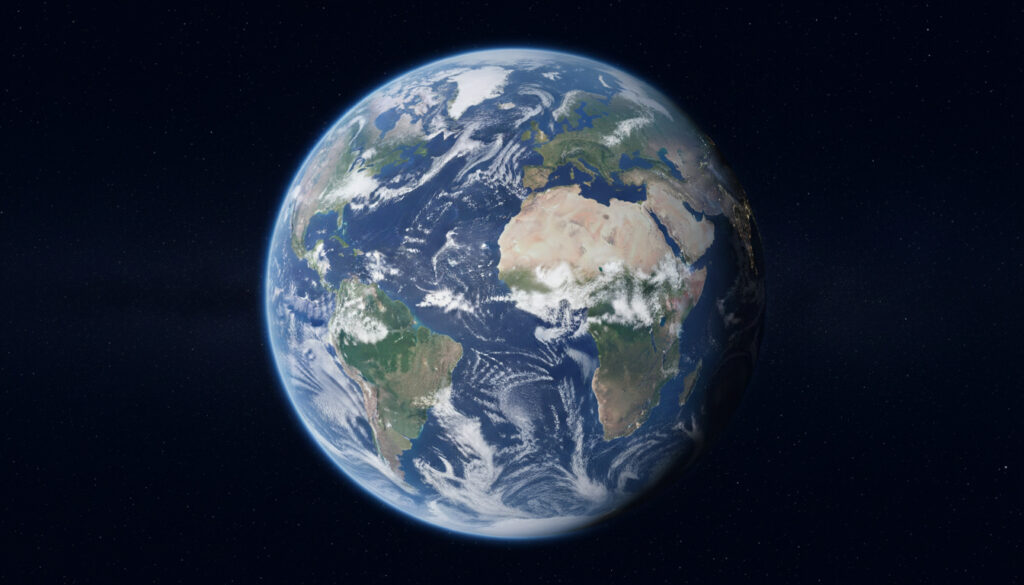
These frameworks divide the world’s landmass—approximately 148 million square kilometers—into the familiar divisions of Africa, Antarctica, Asia, Australia, Europe, North America, and South America, or variations thereof. The differences ultimately hinge on whether one prioritizes geographical separation, cultural distinction, or geological continuity.
Critical Distinctions
The confusion stems from competing definitions of what constitutes a continent. Geologists classify continents based on tectonic plates, identifying distinct continental crust sitting atop the mantle according to Britannica. By this measure, Europe and Asia form a single landmass called Eurasia, while India moves on its own distinct plate.
Geographers and educators, however, often rely on convention and cultural history. The separation of Europe from Asia reflects millennia of distinct civilizations, religious traditions, and historical narratives rather than a physical divide National Geographic notes. The Ural Mountains and the Caucasus serve as arbitrary boundary lines superimposed on continuous terrain.
Cultural and political institutions further complicate the matter. The Olympic Rings symbolize five inhabited continents, excluding Antarctica while merging the Americas according to the International Olympic Committee. This five-continent model aligns with the six-continental view that treats the Americas as a single entity.
Continental Models by Region
| Model | Continents Listed | Primary Usage |
|---|---|---|
| Seven-Continent | Africa, Antarctica, Asia, Australia, Europe, North America, South America | United Kingdom, United States, Canada, China, India, Japan |
| Six-Continent (Americas Combined) | Africa, Antarctica, Asia, Europe, America, Australia/Oceania | Latin America, Iberian Peninsula |
| Six-Continent (Eurasia Combined) | Africa, Antarctica, Asia, Europe, North America, South America | Eastern Europe and some scientific contexts |
| Five-Continent (Olympic) | Africa, America, Asia, Europe, Oceania | International sports organizations |
| Four-Continent | Afro-Eurasia, America, Antarctica, Australia | Geological and some educational systems |
Detailed Frameworks
The seven-continent model gains its authority from widespread educational adoption. In this system, North and South America represent separate continents divided by the Panama Canal and the Isthmus of Panama. Europe and Asia remain distinct despite the absence of an ocean between them. This model reflects a cultural and historical taxonomy rather than a geological one.
The six-continent approaches create larger landmasses either by uniting the Americas or combining Europe and Asia. Spanish and Portuguese-speaking nations traditionally teach that America is a single continent, reflecting the historical conception of the Western Hemisphere as a unified New World discovered in the 15th century World Atlas explains. Conversely, some Eastern European educational systems teach a six-continent model where Eurasia counts as one, acknowledging the continuous land bridge.
Geological purists argue for a four-continent model based strictly on continental crust and tectonic boundaries. Afro-Eurasia represents the supercontinent combining Africa, Europe, and Asia. The Americas form another geological unit connected by the narrow but solid Isthmus of Panama. Antarctica and Australia stand alone as island continents. This view supported by the Geological Society emphasizes that traditional divisions are politically and culturally constructed.
The Evolution of Continental Thought
Ancient Greek sailors initially distinguished between Europe, Asia, and Libya (Africa), viewing the Mediterranean as the center of the world. The concept of continents emerged from the Greek word kontinent, meaning “to hold together,” originally referring to continuous land.
The Age of Exploration shattered these early categories. When European explorers reached the Western Hemisphere, they initially considered the Americas part of Asia. By the 16th century, geographers recognized the Americas as distinct landmasses, though the question of whether they constituted one continent or two remained unresolved.
The 18th century brought the delineation of Australia and Antarctica as separate entities, expanding the count. By the 20th century, educational systems had crystallized into the competing models recognized today, with colonial history and language influence determining which model predominated in different regions.
Why the Ambiguity Persists
No international body holds definitive authority over continental classification. Unlike units of measurement or time zones, continents lack a standardizing scientific organization. The International Organization for Standardization (ISO) codes countries but does not certify continental boundaries.
The definition problem intensifies when considering submerged continental shelves. Zealandia, a 4.9 million square kilometer landmass submerged beneath the Pacific Ocean, meets geological criteria for a continent yet remains largely unrecognized in educational materials as detailed in GSA Today. Similarly, the Indian subcontinent moves on a distinct tectonic plate, yet rarely receives continental status in standard education.
Contemporary Implications
These distinctions matter beyond classroom geography. The United Nations geoscheme divides the world into macro-geographical regions for statistical purposes, using a modified seven-continent framework that influences international aid, economic reporting, and demographic studies. Sporting federations organize competitions around five-continental associations, affecting qualification standards and representation.
Educational publishers face the challenge of creating atlases that serve global markets. A textbook printed for Mexico must recognize America as a single continent, while the same publisher’s English-language edition for Canada must depict two Americas. This tectonic versus cultural tension creates distinct epistemological frameworks that shape how students perceive global relationships.
Climate science increasingly relies on geological continental definitions to model tectonic shifts and long-term climate patterns, while human geographers require the cultural distinctions that separate European history from Asian studies. The Olympic model’s persistence demonstrates how symbolic geography can override physical definitions in institutional contexts.
Perspectives from the Field
“The question of how many continents exist is essentially a question about how humans categorize continuous physical space. There is no scientific law that mandates seven or six or four. There are only conventions.”
— Dr. Martin Lewis, Department of Geography, Stanford University
“From a plate tectonics perspective, we might recognize twelve or fourteen continental fragments. The traditional seven are an administrative convenience, not a geological reality.”
— Dr. Richard Gordon, Geological Sciences, Rice University
Synthesis
The seven-continent model offers the most widely recognized framework, particularly across the Anglophone world, yet it represents a cultural and educational consensus rather than a scientific fact. The six-continent alternatives—whether combining the Americas or merging Eurasia—carry equal validity in their respective cultural contexts. Geological definitions suggest even fewer continents, while emerging research on submerged landmasses like Zealandia may eventually force a reconsideration of what constitutes continental status.
Ultimately, the answer depends on whether one asks a geologist, a historian, or an Olympic organizer. Each provides a defensible answer based on distinct criteria: tectonic stability, cultural continuity, or institutional tradition.
Frequently Asked Questions
Why do different countries teach different numbers of continents?
Educational systems reflect historical, cultural, and linguistic traditions. Spanish and Portuguese-speaking nations historically viewed the Western Hemisphere as a single landmass discovered through voyages of exploration, leading to the six-continent model. English-speaking countries, influenced by different cartographic traditions, adopted the seven-continent framework. No international standard exists to mandate a specific model.
Is there a scientifically correct number of continents?
Scientific consensus varies by discipline. Geologists prioritizing tectonic plates might identify four to seven continents depending on whether they distinguish microcontinents like India or Arabia. Biogeographers might recognize different boundaries based on species distribution. The conventional seven-continent model is a pedagogical tool rather than a scientific measurement.
Why isn’t Antarctica considered part of another continent?
Antarctica sits on the Antarctic Plate and remains physically isolated from other major landmasses by the Southern Ocean. It supports no indigenous human population and maintains distinct biological and climatic conditions. While it shares geological history with ancient Gondwana, its current isolation warrants separate continental status in all major classification systems.
What is Zealandia and why isn’t it a continent?
Zealandia is a submerged continental mass approximately two-thirds the size of Australia, located beneath the Pacific Ocean around New Zealand. While it meets geological criteria for a continent—elevated crust, distinct geology, and defined limits—it remains largely underwater. Some geologists advocate for its recognition as the eighth continent, though it has not achieved widespread acceptance in general education.
Do the Olympic Rings really represent continents?
The five interlocking rings symbolize the five inhabited continents as understood by the Olympic movement: Africa, the Americas, Asia, Europe, and Oceania (Australia). This five-continent model excludes Antarctica due to its lack of permanent inhabitants and combines the Americas as a single entity. The rings represent continental unity through sport rather than strict geographical classification.
More related posts
 UK Nine-Day Snowstorm 2026: Forecast, Warnings and Impact
 Car Breakers Near Me – Find UK Scrap Yards & Used Parts
 Evoke PLC Share Price – Live LSE AIM Data and Analysis
 My Virgin Media Login: How to Sign In to Your Account
 Cheap Private Number Plates Under £200 – Best Deals Guide
 Love Island Season 12 – Premiere Date Cast Location
 Royal Mail Large Letter Size – 2025 Dimensions, Weight and Prices Guide
 Home Office Contact Number: Phone, Email & UK Guide