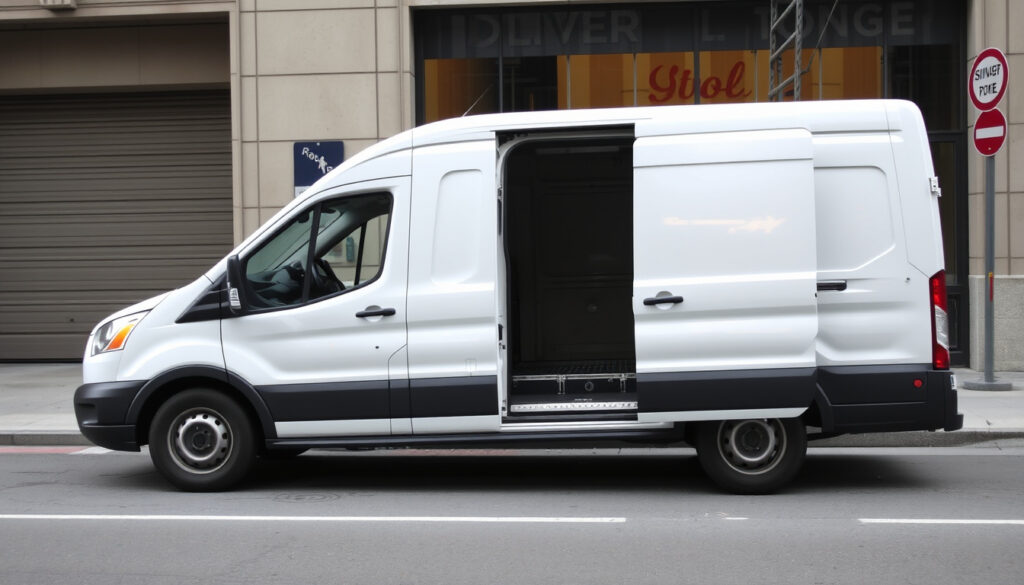
Transit Van: Definition, Problems, Cost & Licence Guide
Few vans have earned a spot on British driveways and building sites quite like the Ford Transit. It’s been around since 1965, and if you’re weighing up a workhorse that can also double as a camper or a crew mover, you’ve probably spotted one on every motorway services car park. This guide lays out what the Transit van actually means, the recurring problems that owners report, how much you’ll realistically pay, and which licence rules apply to the 3.5-tonne variant that’s most common on UK roads.
Production start: 1965 ·
Payload (largest variant): 2,447 kg ·
Typical new price (UK): £35,000–£55,000 ·
Common engine problems: EGR valve, turbo, injectors ·
GVWR (3.5t variant): 3,500 kg
Quick snapshot
- Exact failure rates for specific engine variants are not publicly aggregated
- Long-term reliability of the latest 2.0L EcoBlue engine is still being assessed
The table below summarises the core specifications every buyer should know before committing to a Transit.
| First produced | 1965 | Wikipedia |
| Manufacturer | Ford Motor Company | |
| Typical GVWR | 3,500 kg (3.5 tonnes) | Carbase |
| Max payload | 2,447 kg | |
| Common engine | 2.0L EcoBlue diesel | |
| UK car licence limit | 3,500 kg MAM | GOV.UK (licence categories) |
What does Transit van mean?
Origin of the name Transit
The Ford Transit is a family of light commercial vehicles that has been produced by Ford since 1965, as noted by Wikipedia. The name “Transit” was chosen to suggest mobility and versatility, and it stuck across generations.
Ford Transit vs Transit van terminology
Technically, the Ford Transit line includes panel vans, minibuses, chassis cabs, and kombi variants. But in everyday UK speak, “Transit van” usually refers to the cargo van body style — the one with a solid roof and side loading doors. The Transit Custom is a slightly smaller model sharing the name but sitting in a different weight class.
What are common problems with Ford Transit vans?
Engine issues (EGR, turbo, injectors)
Common problems reported by ClickMechanic (aftermarket repair specialist) include EGR valve failures, turbocharger issues, injector faults, and DPF blockages. MK7 models are particularly known for injector problems that cause rough running and loss of power.
Transmission problems
Transmission slipping and rough shifting have been noted by owner forums and aftermarket sources such as Moxie Van (van conversion specialist), though these reports carry medium confidence as exact failure rates are not formally published.
Electrical faults
Some owners on Reddit’s r/VanLife community report battery-related issues, but this is anecdotal and cannot be generalized to the whole fleet.
Rust and corrosion
Older Transits—especially early 2000s models—are susceptible to rust on body panels and underbody. It’s a factor to check carefully on any used example.
What is the cost of a Transit van?
New Transit van prices
New Ford Transit vans typically range from approximately £35,000 to £55,000 depending on specification, according to Ford UK (manufacturer).
Used Transit van prices
Used prices vary widely. A 2023 model in Ireland can be found for around £13,780 on marketplaces like DoneDeal. For a 2018–2020 example in good condition, expect £10,000–£18,000 depending on mileage and specification.
Transit Connect cost
The smaller Ford Transit Connect starts at around £25,000 new and used examples from £5,000—a more accessible entry point for light-duty use.
New Transit vans come with a full warranty but depreciate quickly. Used ones can represent good value if the common engine issues have been addressed.
Is a Transit van 3.5 tonne?
Gross vehicle weight rating (GVWR) explained
Many Ford Transit vans have a gross vehicle weight of 3,500 kg (3.5 tonnes), as confirmed by Carbase (vehicle information source). This is the most common variant sold in the UK because it falls under the standard car licence threshold.
3.5-tonne variants vs lighter models
Lighter versions exist, such as the 2.8-tonne model, which are less common. The 3.5-tonne version is the one you’ll encounter most on dealer forecourts.
Can I drive a Transit van on a car licence in the UK?
UK driving licence categories
In the UK, a full Category B car licence allows driving vehicles up to 3,500 kg maximum authorised mass (MAM), as explained by Carwow (automotive advice platform).
Weight limits for car licence holders
A Ford Transit with a GVWR of 3,500 kg can be driven on a car licence. Vans over that limit require C1 entitlement, which is typically only available to drivers who passed their test before 1 January 1997 or who have taken an additional test, per Confused.com (insurance comparison guide).
Drivers who passed after 1997 may still drive a 3.5-tonne Transit without any extra tests, but any van upgrade to a 4.25-tonne model (such as a Luton body) requires a C1 medical and theory test.
Can you live in a Transit van full time?
Converting a Transit van for living
Many people convert Ford Transit vans into campervans for full-time living. The Ford Transit is widely regarded as one of the best vans for conversion due to its boxy shape, high roof options, and mechanical robustness, as reported by Club 80-90 (van conversion community).
Pros and cons of full-time van life
Full-time van life requires careful planning for insulation, power, and water systems. The Transit’s LWB (long wheelbase) and high roof variants offer the most livable space. Downsides include limited stealth camping potential and the need to manage DPF regeneration if the van is mostly parked.
Best vans for full-time living
Alongside the Transit, the Mercedes Sprinter and VW Crafter are top contenders. However, the Transit often wins on parts availability and lower purchase cost.
If you’re planning a conversion, choose a post-2014 Transit with a reliable engine (avoid the early 2.0L EcoBlue). Budget at least £5,000 for a basic camper setup on top of the van price.
What year of Ford Transit should I avoid?
Model years with known issues
Some model years, particularly 2015–2017, have reported more engine and transmission problems, according to ClickMechanic. These years correspond to the early Mk8 generation with the new 2.0L EcoBlue engine.
Which Ford engine to stay away from
The 2.0L EcoBlue engine in its first iterations (2016–2019) has had injector, DPF, and EGR valve issues. In contrast, the 2.2L Duratorq engine (used in earlier Mk7 and some Mk8 vans) is generally considered more reliable by the same source.
If you’re on a tight budget, a late Mk7 (2012–2014) with the 2.2L Duratorq is a safer bet than a 2016–2017 Mk8 EcoBlue. If you can stretch to a 2020 or later model, many of the early bugs have been addressed.
Upsides
- Proven platform with decades of development
- Parts availability across UK and Ireland
- 3.5-tonne variant accessible with standard car licence
- Good conversion potential for camper use
Downsides
- Common engine issues in early Mk8 (2015-2017)
- Rust prone on older models
- Heavy depreciation on new purchases
- Insurance can be costly for younger drivers
pegasuscouriers.co.uk, gov.uk, gov.uk, rac.co.uk, youtube.com, carcheck.co.uk
For a more detailed look at current market prices and common pitfalls, check out this 2025 used buying guide for the Transit Van.
Frequently asked questions
What is the fuel economy of a Ford Transit van?
Official fuel economy for the 2.0L EcoBlue diesel varies from 30–40 mpg depending on load and driving conditions. Real-world figures are typically around 28–35 mpg for mixed use.
How much can a Ford Transit van tow?
A Ford Transit van can typically tow up to 2,800 kg braked, depending on the variant. Always check the specific VIN’s towing capacity.
What is the payload capacity of a Ford Transit van?
Payload capacities range from about 1,200 kg for small wheelbase vans up to 2,447 kg for the largest variants. The 3.5-tonne model usually offers around 1,500–1,800 kg payload.
How long is a Ford Transit van?
Lengths vary: short wheelbase ~5.0 m, medium ~5.5 m, long wheelbase ~6.7 m. Roof height also varies between standard, medium, and high.
Is the Ford Transit van reliable?
Overall reliability is considered average for the class. The 2.2L Duratorq engine is more reliable than the early 2.0L EcoBlue. Regular maintenance is critical.
What is the difference between Ford Transit and Transit Custom?
The Transit Custom is a smaller, front-wheel-drive van introduced in 2013, aimed at urban use. It has a lower payload and lower cost compared to the full-size Transit.
How much does a used Ford Transit van cost in Ireland?
Used prices in Ireland start around €5,000 for older high-mileage examples and go up to €25,000 for low-mileage late models. A 2023 model was seen at approximately €16,000.
More related posts
 Susan Hampshire at 89: Forsyte Saga Return and Life Now
 Jeffrey Tambor: Career, Controversies and Personal Life Explained
 What Does IMO Mean? Text, Shipping, and App Meanings
 Dappy N-Dubz: Career, Conviction, and Comeback Story
 Prayer Times in London 2025 – Accurate Daily Timetables
 Best Series on Disney Plus – Most Watched and Acclaimed 2024
 Lauren Hashian: Dwayne Johnson’s Wife, Age, Children, and Career
 Bt Email Login Page – Official Access, App and Setup Guide