Baa Baa Black Sheep – Lyrics, Origin, History & Activities
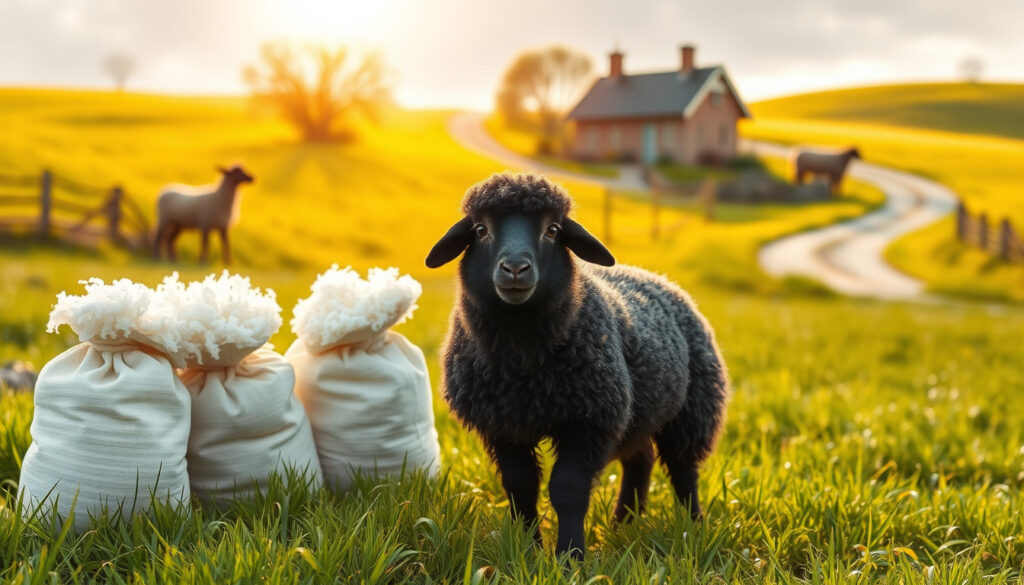
“Baa, Baa, Black Sheep” stands among the most enduring nursery rhymes in the English-speaking world, with origins tracing back to the mid-18th century. First printed around 1744 in Tommy Thumb’s Pretty Song Book, the rhyme has maintained its essential structure for nearly three centuries, becoming a staple of early childhood education across generations. The familiar verses about a sheep and its three bags of wool introduce young learners to rhythm, rhyme, and counting through simple, memorable language.
The rhyme’s melody connects it to a broader musical heritage, derived from a 1761 French tune that also serves as the foundation for “Twinkle, Twinkle, Little Star” and “The Alphabet Song.” This shared musical lineage demonstrates how nursery rhymes often draw from common cultural wells, adapting existing melodies to new lyrics as they pass through communities and generations. The simplicity of both melody and text has allowed the rhyme to transcend cultural boundaries while maintaining its distinctive character.
Beyond its role as a children’s song, “Baa, Baa, Black Sheep” has attracted scholarly attention for its historical significance and the various interpretations placed upon its verses. While some theories link the rhyme to medieval wool taxation, these connections remain speculative and lack solid documentary evidence. The song’s journey from early printed collections to modern digital platforms reflects broader changes in how educational content reaches young audiences.
1744, Tommy Thumb’s Pretty Song Book
Distribution of wool among three recipients
Three bags allocated: master, dame, boy
Children’s education and entertainment
What Are the Lyrics to ‘Baa Baa Black Sheep’?
The modern standard version of the rhyme consists of eight lines that have remained largely unchanged since the earliest printed editions. The text follows a question-and-answer format between an unseen questioner and the black sheep, creating a simple dialogue that young children can easily follow and participate in. This interactive structure encourages engagement and memorization through call-and-response singing.
Baa, baa, black sheep,
Have you any wool?
Yes sir, yes sir,
Three bags full.
One for the master,
One for the dame,
And one for the little boy
Who lives down the lane.
The 1744 original from Tommy Thumb’s Pretty Song Book shows subtle differences in spelling and phrasing that reflect the conventions of the era. The opening line read “Bah, Bah, a black Sheep” rather than the modern “Baa, baa, black sheep,” while “Yes merry have I” replaced “Yes sir, yes sir” as the sheep’s response. These variations demonstrate how oral tradition and print culture interacted to shape the rhyme’s evolution over time.
Perhaps most significantly, a 1765 version printed in Mother Goose’s Melody ended with a notably different conclusion: “But none for the little boy who cries in the lane.” This earlier interpretation suggested that the boy received nothing, with the wool entirely consumed by the master and dame. The shift to the modern version, where all three recipients receive their share, represents a meaningful change in the rhyme’s narrative from exclusion to generous sharing.
Key Facts About the Lyrics
- The rhyme contains exactly eight lines organized into four couplets
- The question-and-answer format introduces children to conversational structures
- The number three appears twice, reinforcing early counting skills
- Specific recipients (master, dame, boy) provide narrative context
- The sheep’s polite “Yes sir, yes sir” models courteous speech
- The final line names the boy as “Who lives down the lane,” adding geographic specificity
- The rhyme uses simple, monosyllabic words suitable for young learners
| Element | Details |
|---|---|
| First Printed | Approximately 1744 |
| Total Lines | Eight |
| Number of Couplets | Four |
| Recipients Named | Master, Dame, Little Boy |
| Bags of Wool | Three (described as “full”) |
| Rhyme Scheme | AABBCCDD |
| Primary Rhyme Pairs | wool/full, dame/lane |
| Melodic Source | “Ah! vous dirai-je, maman” (French, 1761) |
What Is the Origin of ‘Baa Baa Black Sheep’?
The earliest surviving version of “Baa, Baa, Black Sheep” appeared in Tommy Thumb’s Pretty Song Book around 1744, making it one of the oldest printed nursery rhymes in the English language. This collection is the oldest surviving compilation of English nursery rhymes, preserving texts that had previously circulated only through oral tradition. The rhyme’s appearance in print during the mid-18th century coincided with a broader movement to codify and standardize children’s literature in Britain.
Historical analysis suggests the rhyme may have existed in oral form for decades or even centuries before its first print appearance. The crude rhyming and simple structure of the verses indicate folk origins rather than sophisticated literary composition. Researchers estimate oral versions may have circulated as early as 1731, based on references in contemporary documents, though no surviving texts confirm this earlier date.
The Medieval Taxation Theory
One of the most persistent theories about the rhyme’s origin connects it to the medieval wool trade and associated taxation policies. According to this interpretation, the “three bags full” represent the division of wool profits under the “Great Custom” or “Old Custom” tax established during the reign of King Edward I in 1275. Under this system, wool exports faced a fixed duty that divided revenue among three parties: the king (the “master”), the church (the “dame”), and the wool producer or farmer (the “little boy”).
The medieval wool taxation system required producers to pay duties on their exports, with revenues flowing to both secular and ecclesiastical authorities. The three-way division of profits reflected the interconnected nature of medieval commerce, religion, and royal governance.
The scholarly basis for this interpretation derives primarily from Katherine Elwes Thomas’s 1930 book The Real Personages of Mother Goose, which attempted to identify historical events and personalities behind familiar nursery rhymes. However, subsequent researchers have noted significant weaknesses in this theory, including the lack of any contemporary documents linking the rhyme to tax policy and the difficulty of tracing direct connections across several centuries of oral transmission.
Alternative Interpretations
Critics of the taxation theory point out that the rhyme’s simple, repetitive structure resembles other early childhood songs rather than political commentary or historical documentation. The sheep’s willingness to share its wool and the courteous exchange between questioner and animal suggest a straightforward educational purpose rather than coded social criticism. Additionally, the specific identities of the master, dame, and boy remain disputed, with no consensus among historians about their actual referents.
Claims linking the rhyme to the United States slave trade emerged during 1980s debates about racial sensitivity in children’s literature. However, these assertions lack historical documentation and have been rejected by scholars who study both nursery rhymes and American history. Black sheep wool was historically valued for producing undyed dark cloth, a practical consideration that likely explains the reference to black wool rather than any symbolic meaning.
What Are the Most Popular Versions of ‘Baa Baa Black Sheep’?
Contemporary children can encounter “Baa, Baa, Black Sheep” through numerous digital platforms, with animated videos and musical recordings featuring prominently in early childhood education. Major children’s entertainment channels and recording artists have produced their own interpretations, each bringing distinct visual styles and musical arrangements to the familiar text. These modern adaptations maintain the core lyrics while often adding interactive elements designed to engage young viewers.
Major Digital Versions
YouTube hosts extensive collections of nursery rhyme videos featuring “Baa, Baa, Black Sheep” in various styles. Channels like HooplaKidz and Raffi have produced animated versions that combine colorful visuals with musical accompaniment, making the rhyme accessible to children who encounter it primarily through screens rather than live singing. These productions typically run between two and four minutes and may include the rhyme repeated several times with different musical arrangements.
The Mother Goose Club represents another significant presence in the digital nursery rhyme landscape, featuring live-action and animated interpretations designed for preschool audiences. Similarly, Super Simple Songs has produced versions that emphasize clear enunciation and simple animations, catering to language learners and children with developing attention spans.
Educational Adaptations
Accessible versions using Makaton sign language have made the rhyme available to children with hearing impairments or communication difficulties. These adaptations pair the familiar lyrics with standardized hand signs, allowing all children to participate in singing activities regardless of auditory ability. The Makaton version demonstrates how traditional rhymes continue to evolve to meet diverse educational needs.
In 2006, some UK nurseries began modifying the rhyme, replacing “black sheep” with “rainbow sheep” or other colorful variants. Similar discussions occurred in Australia’s Victoria state in 2014, reflecting ongoing conversations about the language used in early childhood education.
What Activities Can I Do with ‘Baa Baa Black Sheep’?
The rhyme offers numerous opportunities for hands-on learning activities suitable for children from toddler age through early primary school. Educators and parents can leverage the song’s simple structure to teach various skills while keeping children engaged through movement and creativity. The repetitive nature of the text makes it an excellent tool for developing memory and language skills.
Sing-Along Activities
Traditional sing-alongs incorporate physical actions that help children connect words with movements. Children can mime the shearing motion when asking about wool, hold up fingers to count the three bags, and point in different directions when naming the master, dame, and little boy. These physical associations reinforce learning and help children with different learning styles engage with the material effectively. Many preschool classrooms incorporate these actions as part of regular music time.
Creative Projects
Craft activities provide opportunities for artistic expression while reinforcing the rhyme’s imagery. Simple sheep crafts using cotton balls or pom-poms allow children to create their own woolly friends, while paper bag puppets enable storytelling and dramatic play based on the rhyme’s characters. Older children might explore the historical context by creating timeline projects or researching medieval wool production, adapting the content for different age levels and educational goals.
Educators have developed inclusive variations that maintain the rhyme’s educational value while addressing concerns about terminology. “Rainbow sheep” adaptations allow children to explore color concepts alongside the original text, demonstrating how traditional content can evolve to meet contemporary educational standards.
Where Can I Find ‘Baa Baa Black Sheep’ Books and Downloads?
Numerous publishers have released picture books featuring “Baa, Baa, Black Sheep,” ranging from simple illustrated versions to elaborate pop-up productions. These books often include additional verses, sheet music for accompanying adults, and suggested activities for extending the learning experience. Parents can find both new releases through major booksellers and free printable resources through educational websites and public library collections.
Printable lyric sheets and activity pages are available through various educational platforms, offering free downloads for personal and classroom use. These resources typically include the full text of the rhyme, suggested activities, and coloring pages featuring sheep imagery. Teachers and caregivers should verify the source and intended age range before downloading materials for use with children.
Sheet music for the melody allows musically inclined adults to accompany children’s singing, introducing concepts of rhythm and melody while reinforcing the familiar text. The shared melodic lineage with “Twinkle, Twinkle, Little Star” means that children who know one rhyme can easily learn the other, creating opportunities for cross-referencing and expanded musical learning.
A Timeline of ‘Baa Baa Black Sheep’
The rhyme’s history spans nearly three centuries, from its earliest documented appearance to its current status as a digital age phenomenon. Understanding this timeline helps contextualize how children’s literature evolves while maintaining core traditional elements.
- Approximately 1731–1744: The rhyme circulates in oral tradition before first appearing in print
- 1744: Tommy Thumb’s Pretty Song Book publishes the earliest surviving version
- 1765: Mother Goose’s Melody includes a variant with the boy receiving nothing
- 1761: The French melody “Ah! vous dirai-je, maman” is documented, later serving as the tune
- 1780s: Mozart creates variations on the French melody, later associated with English nursery rhymes
- 1930: Katherine Elwes Thomas publishes theories linking the rhyme to medieval taxation
- 1980s: Debates emerge about racial implications, though without scholarly support
- 2006: UK nurseries begin introducing alternative versions like “Rainbow Sheep”
- 2014: Australian educational authorities consider modifications to the standard text
- Present: Digital platforms host numerous animated and musical versions
What Is Certain and Uncertain About the Rhyme?
Scholars have established certain facts about “Baa, Baa, Black Sheep” while other aspects remain genuinely unclear or disputed. Recognizing this distinction helps readers navigate the various claims made about the rhyme’s origins and meaning.
Established Information
- First printed around 1744 in Tommy Thumb’s Pretty Song Book
- Contains eight lines in modern standard version
- Shares melody with “Twinkle, Twinkle, Little Star”
- Uses the same tune as “The Alphabet Song”
- Originally printed in England
- Has remained popular continuously since first publication
- Has been adapted for sign language and accessibility
- Exists in numerous modern digital versions
Uncertain or Disputed Information
- Exact original date of composition
- Whether the rhyme was created specifically for children
- Connection to medieval wool taxation (unverified theory)
- Identity of the “master,” “dame,” and “little boy”
- Whether earlier oral versions existed
- Original purpose of the rhyme
- Geographical origin within England
- Authorship or source of the original text
Why Does This Nursery Rhyme Matter?
“Baa, Baa, Black Sheep” occupies a significant place in the cultural heritage of English-speaking countries, serving as a bridge between generations and a vehicle for early childhood education. Its persistence across nearly three centuries demonstrates the power of simple, well-crafted texts to maintain relevance as society changes around them. The rhyme introduces children to fundamental concepts of rhythm, repetition, and narrative structure that support broader literacy development.
The song also illustrates how cultural artifacts can accumulate multiple interpretations over time. What began as a simple children’s verse has attracted theories connecting it to tax policy, religious symbolism, and social commentary, though many of these connections lack solid historical foundations. This layering of meaning reflects human tendency to find significance in familiar texts and to project contemporary concerns onto historical artifacts.
For parents and educators, the rhyme offers practical value as an educational tool while also opening conversations about how traditional content can be adapted for diverse audiences. The development of accessible versions using sign language and inclusive variations like “rainbow sheep” demonstrates that tradition and adaptation can coexist, allowing beloved texts to serve new purposes while maintaining their essential character.
Sources and References
Historical research into nursery rhymes draws from various documentary sources, including early printed collections, music manuscripts, and scholarly analyses of folk traditions. The primary sources for understanding “Baa, Baa, Black Sheep” include the earliest printed versions and their subsequent variations.
“Bah, Bah, a black Sheep, Have you any Wool? Yes merry have I, Three Bags full, One for my Master, One for my Dame, One for my Little Boy That lives in the lane.”
— Original 1744 text from Tommy Thumb’s Pretty Song Book
“Baa, baa, black sheep, Have you any wool? Yes sir, yes sir, Three bags full. One for the master, One for the dame, And one for the little boy Who lives down the lane.”
— Modern standard version widely used in education
Additional context comes from musicological studies tracing the shared melodic origins of this rhyme and other familiar children’s songs. Historical analyses of medieval wool trade and taxation provide background for understanding the cultural context in which theories about the rhyme’s meaning have developed.
Summary
“Baa, Baa, Black Sheep” represents one of the oldest and most enduring nursery rhymes in the English language, with origins dating to around 1744 when it appeared in Tommy Thumb’s Pretty Song Book. The eight-line rhyme, which asks a black sheep about its wool and receives an answer about three bags full destined for a master, dame, and little boy, has remained largely unchanged for nearly three centuries. Its melody, shared with “Twinkle, Twinkle, Little Star” and “The Alphabet Song,” derives from a 1761 French tune that Mozart later varied.
While various theories link the rhyme to medieval wool taxation or other historical events, these connections remain unverified and speculative. The rhyme’s true origins and original purpose continue to elude definitive scholarly explanation. However, its continued popularity in both traditional and adapted forms demonstrates the enduring appeal of simple, rhythmic children’s verses. Modern parents and educators can access the rhyme through numerous digital platforms, printable resources, and accessible versions designed for diverse learners. For those interested in exploring traditional children’s literature further, resources like Each Peach Pear Plum – Summary, Lyrics, Authors & Activities offer similar historical and educational content about classic nursery rhyme collections.
Frequently Asked Questions
What is the connection between “Baa Baa Black Sheep” and “The Wheels on the Bus”?
While both are popular children’s songs, they are separate nursery rhymes with different origins and lyrics. Some children’s music albums or compilations may include both songs in medleys or playlist collections, but the rhymes themselves share no direct connection.
Who are The Countdown Kids?
The Countdown Kids is a children’s music group known for producing nursery rhyme recordings. Their version of “Baa Baa Black Sheep” follows the standard lyrics and melody, typical of children’s music recordings designed for educational and entertainment purposes.
Does Super Simple Songs have a version of this rhyme?
Yes, Super Simple Songs, a popular children’s music channel, has produced animated nursery rhyme content including “Baa Baa Black Sheep.” These versions typically feature simplified visuals and clear pronunciation suitable for young language learners.
Why do some versions say “Bah” instead of “Baa”?
The 1744 original used “Bah, Bah, a black Sheep” while modern versions use “Baa, baa, black sheep.” This change reflects natural evolution in spelling and pronunciation as the rhyme passed through oral and printed transmission over nearly three centuries.
What is the melody source for this rhyme?
The melody comes from the 1761 French tune “Ah! vous dirai-je, maman.” This same melody later served as the foundation for “Twinkle, Twinkle, Little Star” and “The Alphabet Song,” making it one of the most widely recognized tunes in children’s music worldwide.
Are there accessible versions for children with hearing impairments?
Yes, Makaton sign language versions of the rhyme exist, pairing the familiar lyrics with standardized hand signs. These adaptations allow children with hearing difficulties or communication challenges to participate in singing activities alongside their peers.
What did the 1765 version say about the little boy?
The 1765 version printed in Mother Goose’s Melody ended with “But none for the little boy who cries in the lane,” suggesting the boy received no wool. This earlier, darker interpretation contrasts with the modern version where all three recipients receive their share.
More related posts
 Patsy Cline Plane Crash: Facts About Her Death and Legacy
 Can Dogs Eat Peanut Butter – Full Safety Guide
 What Is a Modal Verb? Definition, 9 Examples & List
 NatWest Online Banking Login – Step-by-Step Guide
 Blue Bay Resort Rhodes: Location, Beach & All-Inclusive
 NatWest Online Banking Login – Step-by-Step Access Guide
 Cast of Billy Elliot: Complete Film & Musical Cast